
The Largest Romanian Interconnection Platform
Interlan-EN
2026-11-05 - Asociația Interlan | Statement – Digital Networks Act (DNA)

Asociația Interlan, representing telecommunications operators and Internet Service Providers in Romania, expresses serious concerns regarding the proposed amendments to the European Union’s Digital Networks Act (DNA), particularly those affecting IP interconnection, peering arrangements and the relationship between network operators and content providers.
While we recognise the importance of modernising Europe’s digital infrastructure and regulatory framework, we believe that the proposed parliamentary amendments risk strengthening the position of the largest telecommunications companies at the expense of smaller, independent operators, potentially undermining competition and the open nature of the Internet.
Europe’s regulatory framework must protect competition, not reinforce market concentration
Romania provides a clear example of why competition must remain central to European telecommunications policy.
According to ANCOM, Romania’s national telecommunications regulator, the three largest operators accounted for approximately 98% of fixed Internet connections at the end of 2025, leaving nearly 300 other providers sharing less than 2% of the market.
Despite this significant concentration, smaller and independent Internet Service Providers continue to contribute to local infrastructure development, regional connectivity and consumer choice.
For these operators, fair access to interconnection, commercially negotiated peering arrangements and a competitive Internet ecosystem are essential.
Regulatory changes that increase the negotiating power or economic advantages of already dominant operators could further weaken competition, making it more difficult for independent providers to invest, develop and remain competitive.
Furthermore, independent ISPs frequently rely on wholesale connectivity, IP transit, transport and colocation services provided by larger operators. Any additional costs introduced into the interconnection ecosystem could ultimately be passed down the supply chain, increasing operating expenses for smaller providers and potentially affecting end-users.
Such consequences would be particularly concerning in Romania, where market concentration already limits the alternatives available to independent operators.
European legislation must reflect the diversity of the telecommunications market rather than assume that the interests of the largest operators represent those of the entire industry.
Preserving voluntary interconnection and peering
The Internet has developed through a decentralised system of voluntary interconnection agreements, IP transit, content delivery networks and Internet Exchange Points (IXPs).
This model enables networks of different sizes to exchange traffic efficiently, improve performance and reduce costs, without depending on centrally imposed commercial arrangements.
The proposed parliamentary amendments would introduce additional interconnection obligations for certain large traffic providers, potentially allowing regulatory authorities to impose binding decisions when commercial negotiations fail.
Such measures could fundamentally alter the existing interconnection framework and create opportunities for network usage fees or other forms of financial settlement.
We are particularly concerned that these changes could benefit large telecommunications groups with substantial market power, while offering little demonstrable benefit to smaller and independent ISPs.
The existing system of voluntary peering and interconnection has enabled a diverse Internet ecosystem to develop.
Any departure from this model must be supported by clear evidence of market failure, transparent economic analysis and a thorough assessment of its consequences for all participants, particularly smaller operators.
Regulatory intervention should remain limited to objectively justified and proportionate circumstances, including situations where end-to-end connectivity, effective competition or end-user interests are demonstrably at risk.
The potential impact on Internet Exchange Points and local connectivity
Internet Exchange Points play an essential role in the Internet ecosystem by enabling networks to exchange traffic directly, efficiently and locally.
For independent operators, access to IXPs and settlement-free peering opportunities can help reduce costs, improve network performance and limit dependence on larger transit providers.
We are concerned that introducing additional regulatory intervention into interconnection arrangements could affect these established relationships and create new economic or administrative barriers.
Any changes to the interconnection framework must preserve the ability of networks of all sizes to exchange traffic freely and maintain commercially sustainable peering arrangements.
A regulatory framework that inadvertently increases dependence on the largest telecommunications operators would be particularly concerning in highly concentrated markets such as Romania.
Independent ISPs must have a voice in European telecommunications policy
The debate surrounding the Digital Networks Act has largely focused on the relationship between major telecommunications groups and global content providers.
However, the European Internet ecosystem includes numerous independent, regional and local operators whose business models, resources and commercial interests differ significantly from those of the largest market participants.
These operators contribute to infrastructure development, local connectivity, service diversity and competition.
Their interests must not be overlooked when introducing legislation that could fundamentally change the economics of Internet interconnection.
The DNA must therefore include appropriate safeguards for smaller operators, ensuring that regulatory obligations are proportionate to their size, market position and geographical reach.
Particular attention should be given to avoiding unnecessary administrative requirements, disproportionate compliance costs and indirect financial burdens arising from disputes between major market participants.
Furthermore, regulatory classifications must reflect the actual technical and economic functions of infrastructure.
Content delivery networks, caching systems and cloud infrastructure should not automatically be classified as public electronic communications networks merely because they facilitate the delivery of Internet traffic.
Overly broad classifications could create legal uncertainty, increase compliance costs and introduce inappropriate regulatory obligations.
Equally, existing safeguards concerning net neutrality and open Internet access must remain effective, ensuring that new regulatory provisions do not undermine established protections for Internet users.
Asociația Interlan’s position
Asociația Interlan considers that the proposed parliamentary amendments raise significant concerns regarding competition, interconnection and the future of independent Internet providers.
We therefore urge Members of the European Parliament to reject the proposed amendments that would introduce mandatory interconnection negotiations for online services, binding regulatory intervention in commercial IP interconnection arrangements or mechanisms that could facilitate network usage fees.
We also call for the preservation of appropriate safeguards concerning the regulatory treatment of content delivery networks and net neutrality.
In particular, we believe that the European regulatory framework must:
- Preserve voluntary interconnection and peering, allowing networks to negotiate commercial arrangements freely, while maintaining existing safeguards for end-to-end connectivity.
- Protect fair competition, ensuring that new legislation does not reinforce existing market concentration or disproportionately benefit dominant telecommunications operators.
- Safeguard independent and regional ISPs, recognising their role in providing connectivity, developing infrastructure and maintaining consumer choice.
- Introduce proportionate regulatory obligations, taking into account operators’ size, market position and geographical reach, with appropriate exemptions from unnecessary administrative and financial burdens.
- Prevent disproportionate indirect costs, ensuring that smaller operators are not unfairly disadvantaged by regulatory mechanisms or commercial disputes involving major telecommunications groups and global digital companies.
- Support Internet Exchange Points and local traffic exchange, preserving efficient, decentralised interconnection and commercially sustainable peering arrangements.
- Maintain voluntary cooperation and conciliation mechanisms, ensuring that neither participation nor outcomes become a means of imposing mandatory commercial settlements.
- Ensure technology-neutral and proportionate regulation, avoiding the automatic classification of CDNs and cloud infrastructure as public electronic communications networks.
- Maintain net neutrality and an open Internet, protecting users and supporting innovation throughout the digital ecosystem.
We recognise the European Union’s ambition to strengthen digital infrastructure, encourage investment and improve network resilience. However, these objectives must not come at the expense of competition or the diversity of Europe’s telecommunications sector.
Europe needs a regulatory framework that enables operators of all sizes to compete and innovate, rather than one that risks concentrating even greater economic power in the hands of a few major companies.
Asociația Interlan urges European policymakers to carefully assess the consequences of the proposed amendments for smaller and independent Internet Service Providers, particularly in Member States where telecommunications markets are already highly concentrated.
The future of Europe’s Internet must be built on openness, diversity and fair competition.
Asociația Interlan
2026-08-21 - InterLAN-IX: At the Heart of Romania’s Internet
Behind every click, stream, video call or online service lies an infrastructure most people never see. At the heart of Romania’s digital ecosystem, InterLAN-IX connects networks and enables them to exchange Internet traffic directly.
And the numbers offer a clear picture of its position.
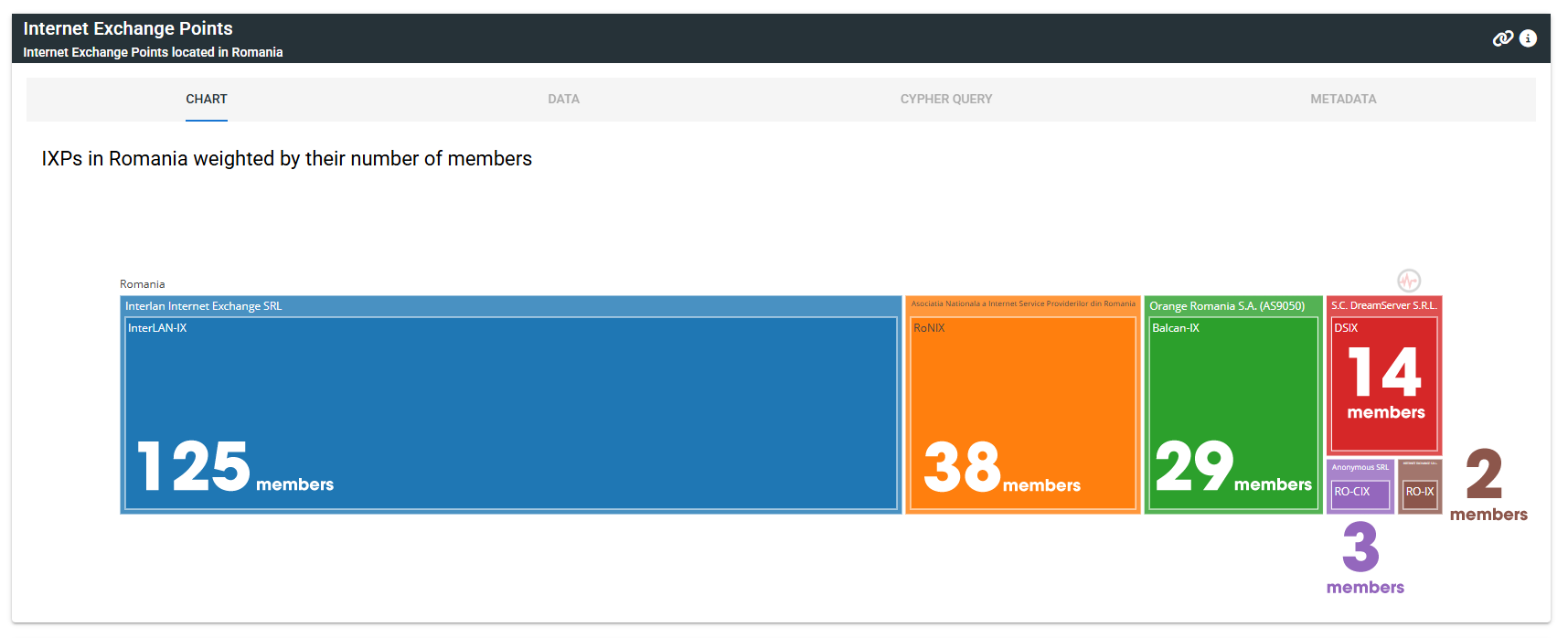
According to the Internet Health Report snapshot from 19 August 2026, InterLAN-IX has 125 members, compared with 38 for RoNIX, 29 for Balcan-IX, 14 for DSIX, 3 for RO-CIX and 2 for RO-IX in the same chart. This places InterLAN-IX clearly ahead of the other Romanian Internet Exchange Points represented in the dataset.
View the Internet Health Report data for Romania
More than a number
The scale of InterLAN-IX goes beyond its membership.
InterLAN-IX is a neutral national interconnection platform for data traffic and Internet exchange. Its infrastructure allows networks to interconnect directly and exchange traffic, enabling more efficient use of operators’ Internet connections.
Official InterLAN figures currently list:
- 1+ Tbps daily peak traffic
- 180+ ASNs present
- 17 interconnection sites
- 6 DNS root servers
InterLAN-IX has points of presence across Romania, including Bucharest, Constanța, Timișoara, Craiova, Arad, Cluj-Napoca, Iași, Suceava and Târgu Secuiesc, as well as international points of presence in Frankfurt, Germany, and Sofia, Bulgaria.
The platform brings together a diverse part of the Internet ecosystem. According to InterLAN, connected entities include fixed and mobile Internet service providers, network operators, content providers, social media platforms, educational networks, financial institutions, domain-name service providers, public institutions and media organizations.
Built by a community
Behind the infrastructure is a community that has been developing for more than two decades.
Asociația Interlan was established in 2005 by representatives of local networks in Bucharest. One of the community’s first projects was the creation of a scalable platform through which networks could exchange traffic directly—the project that became InterLAN.
Today, InterLAN Internet Exchange is entirely owned by Asociația Interlan, the non-profit organization representing telecommunications service providers and network operators in Romania.
Learn more about Asociația Interlan
That makes the development of InterLAN-IX more than a story about infrastructure, switches, capacity or traffic. It is also a story about cooperation.
We would therefore like to thank the members of Asociația Interlan, the networks connected to InterLAN-IX, our partners, the technical teams and everyone who has contributed their knowledge, time and expertise to the development and operation of the platform.
InterLAN-IX reached the 1 Tbps peak-traffic milestone in February 2026, an achievement that InterLAN itself credited to the growth and support of its community.
Read the official InterLAN announcement on reaching 1 Tbps
The figures demonstrate the scale that InterLAN-IX has reached. The community behind those figures is what made that growth possible.
From its beginnings as an initiative connecting local networks to a platform with 125 members represented in the latest IHR snapshot, InterLAN-IX has become a central part of Romania’s Internet interconnection ecosystem.
And that is something worth celebrating together.
2026-05-05 - InterLAN Attends the 44th Euro-IX Forum
Between May 3–5, 2026, the InterLAN delegation is attending the 44th edition of the Euro-IX Forum, one of the most important events dedicated to the Internet Exchange Point (IXP) community, held this year in Vienna, Austria.
The Euro-IX Forum brings together Internet Exchange operators, service providers, network operators, and industry experts from around the world, providing a valuable platform for knowledge sharing, best practices, and discussions on the evolution of Internet infrastructure.
InterLAN’s participation in this event reflects our ongoing commitment to staying aligned with the latest industry developments, strengthening relationships with international partners, and actively contributing to the growth of the interconnection ecosystem.

2024-12-10 - Digital Transformation & AI Comunic@ții Mobile Gala 2024
The Interlan Association received the Excellence Diploma – Internet Community Award last night at the 2024 Digital Transformation & AI Comunic@ții Mobile Gala. This award recognizes its sustained efforts to support local internet service providers and the community of telecommunications and internet specialists in Romania.
This distinction serves as a confirmation of our ongoing work to develop and strengthen a strong community based on innovation, collaboration, and excellence.
We thank the organizers of the 2024 Digital Transformation & AI Comunic@ții Mobile Gala for their appreciation and recognition, but most importantly, we extend our gratitude to our community of specialists and partners who inspire us to improve every day.

2024-05-15 - ANGA COM
The ANGA COM event takes place in Cologne, Germany from May 14th to May 16th, 2024. The event brings together network operators, vendors and content providers on all issues of broadband and media distribution. As part of the Asociatia Interlan delegation, we’re looking forward to exchanging ideas, fostering collaborations, and contributing to discussions that shape the future of our industry.

2024-02-22 - Tele 8 TV available on the InterLAN TVX Platform
Tele 8 TV has become available via multicast streaming on the InterLAN TVX Platform.

The complete list of TV channels available on InterLAN TVX Platform can be found here.
2022-05-04 - Romanian Fiber Optic Conference 2022
“Romanian Fiber Optic Conference” is the most awaited event in the fiber optic industry in Romania and this year it took place on 04.05.2022 at Radisson Blu Bucharest. The event was structured in two sections and contained presentations and debates on national topics of common interest, this year’s theme being “Fiber Optic Infrastructure for Smart Cities and Smart Communities”.
The delegation of the Interlan Association also attended the event, and Eric Băleanu was invited to moderate discussions within the second panel dedicated to network operators.
We applaud the organizers of the Romanian Fiber Optic Conference for the initiative and for the realization of a successful event!

2022-04-11 - General Assembly of the Interlan Association members 09.04.2022
On April 9th, 2022, the General Assembly of the Interlan Association members takes place, an event held in Râmnicu Vâlcea at the Grand Hotel Sofianu. The objective is to ensure the administrative and technical coordination necessary to enable the operation of decision making on future projects, as well as welcoming new members in the Association.
2021-10-03 - InterLAN Tech Workshop#5
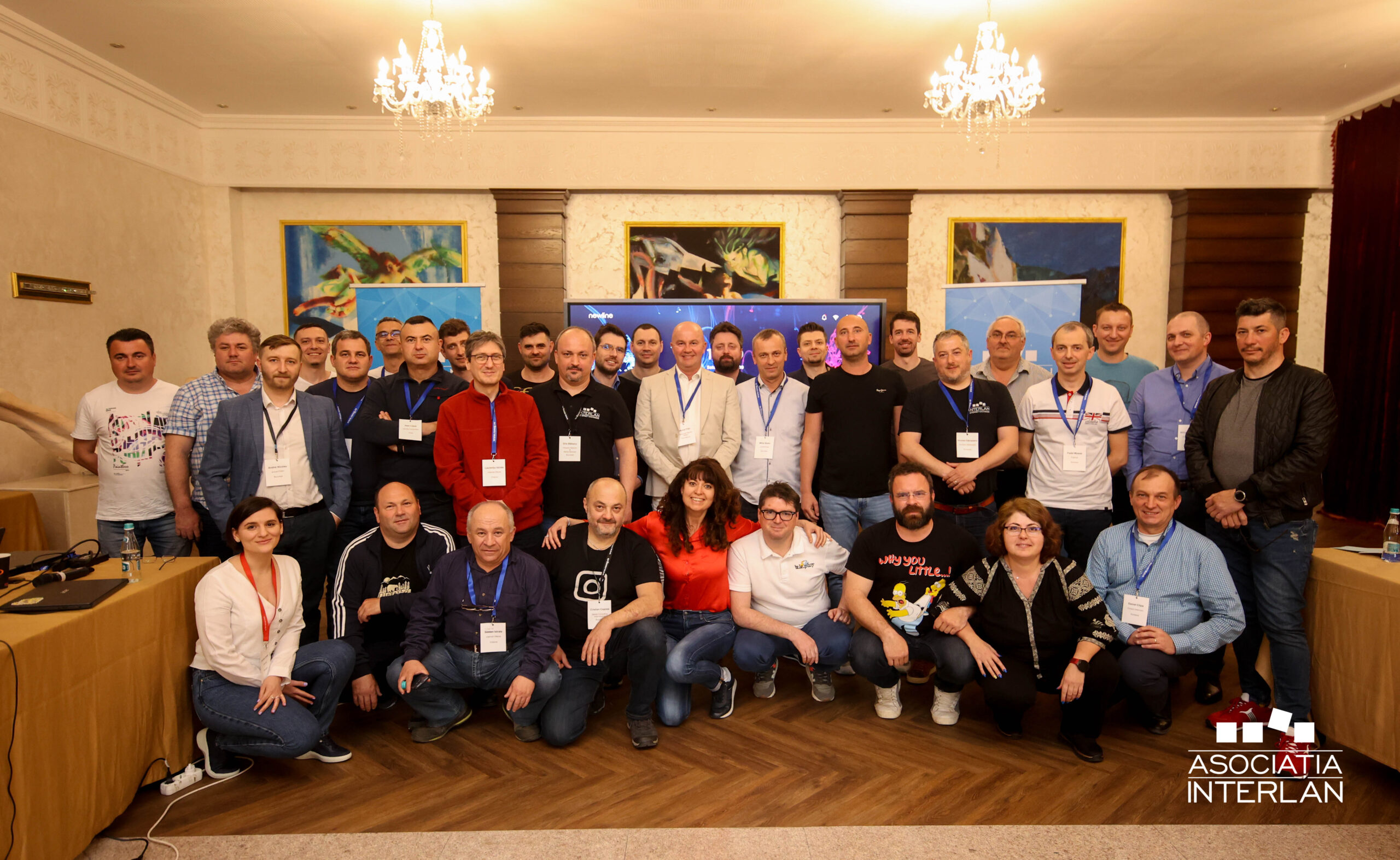
During 1-3 October 2021, Asociația Interlan organized for its members a technical workshop in Jupiter, Constanta. The participants were actively involved and discussed topics such as TVX Platform, Surveillance systems, SRT and other topics of interest for InterLAN community.

2021-09-09 - CEE CEE SUMMER 2021
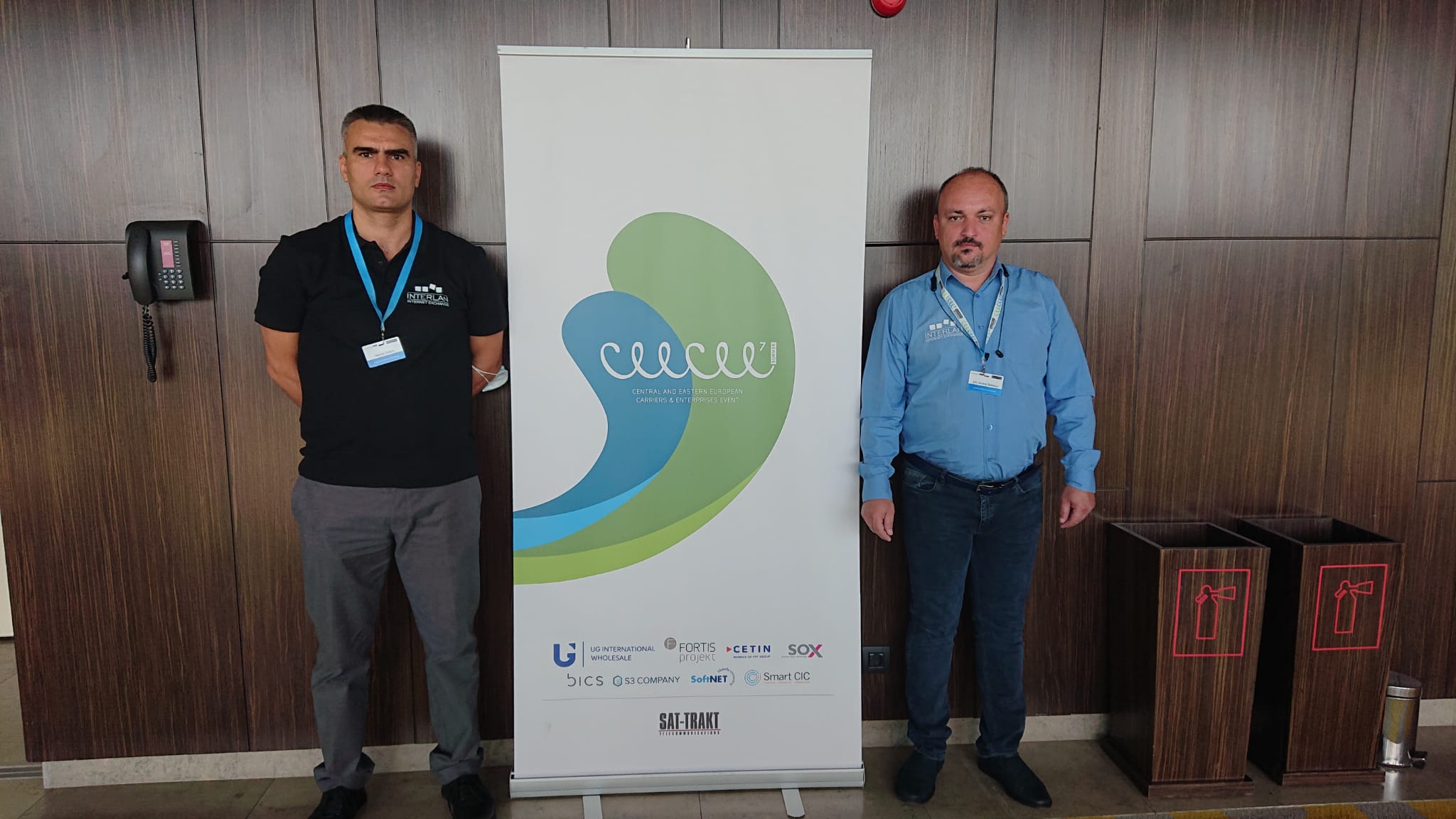
Between September 9th-10th 2021, the “CEE CEE Summer 2021” takes place in Belgrade, Serbia, in which InterLAN Internet Exchange representatives also take part.